| Enjoy Cooler Days Outside, Call Now! |
Shade Structures vs. Patio Covers – What’s the Difference?
What is a Shade Structure?
Shade structures are usually made from strong, UV-resistant fabric like high-density polyethylene (HDPE). They are attached to poles or fixed to your home’s walls. These flexible fabric shades come in different shapes, like triangles, rectangles, or custom designs. They provide wide shade coverage without needing a heavy or solid frame. Common shade structures are shade sails, pergolas, fabric canopies, and gazebos. They’re partially open designs that filter sunlight rather than fully block it.What is a Patio Cover?
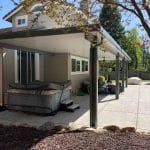
These are more permanent roof-style structures. They can be attached to your home or free-standing, depending on your choice. Solid patio covers create a complete barrier between you and the sky. No sun gets through, and neither does the rain. In contrast, a lattice patio cover allows partial sunlight to filter through while still providing some shade. The most commonly used and popular patio covers are Solid roof covers, Lattice-style covers, Insulated panel systems, and aluminum patio covers.Which One Blocks Heat Better – A Shade Structure or a Patio Cover
| Aspects | Shade Structure | Patio Cover |
|---|---|---|
| UV Deflection | Most fabric materials block around 70-90% of sunlight, depending on the material and tension. That means heat still filters through. | A solid patio cover blocks 100% of direct UV radiation. You’ll feel an immediate temperature difference. However, the material and insulation also make a lot of difference. |
| Airflow | Because they are open, they rely on airflow to stay cool. If there’s no breeze, the sun coming through those open spaces continues to heat up the concrete slab beneath your feet. | High-quality aluminum patio covers are designed to reflect the sun’s energy away from the house. But, if you want some air to pass through, you can go with a Lattice patio cover. Or you can also customize a solid patio cover by installing outdoor ceiling fans to feel cooler. |
| Insulation | Shade structures do not have insulation. Since they are made of fabric, they only block part of the sunlight but do not stop heat from radiating downward. The fabric itself can warm up in extreme heat, which slightly increases the temperature underneath. | Insulated patio covers include insulated panels designed to reduce heat transfer. The top panel reflects sunlight while the insulation layer prevents heat from radiating downward. |
Types of Patio Covers & How They Perform in Heat
1. Solid Patio Covers
These are best for full shade and rain protection. Solid covers completely block sunlight and rain by creating consistent shade throughout the day. They’re great if you want to use your patio even during peak afternoon heat to enjoy dining or to play with kids.2. Lattice Patio Covers
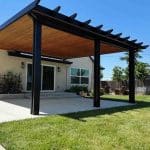
These are best for filtered sunlight and airflow. Lattice patio covers have evenly spaced slats that allow partial sunlight to pass through. They provide shade while keeping the space airy. However, during extreme summer heat, some sunlight still reaches the ground. They’re better for homeowners who want a balance between sun and shade.3. Insulated Aluminum Patio Covers
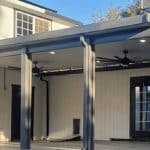
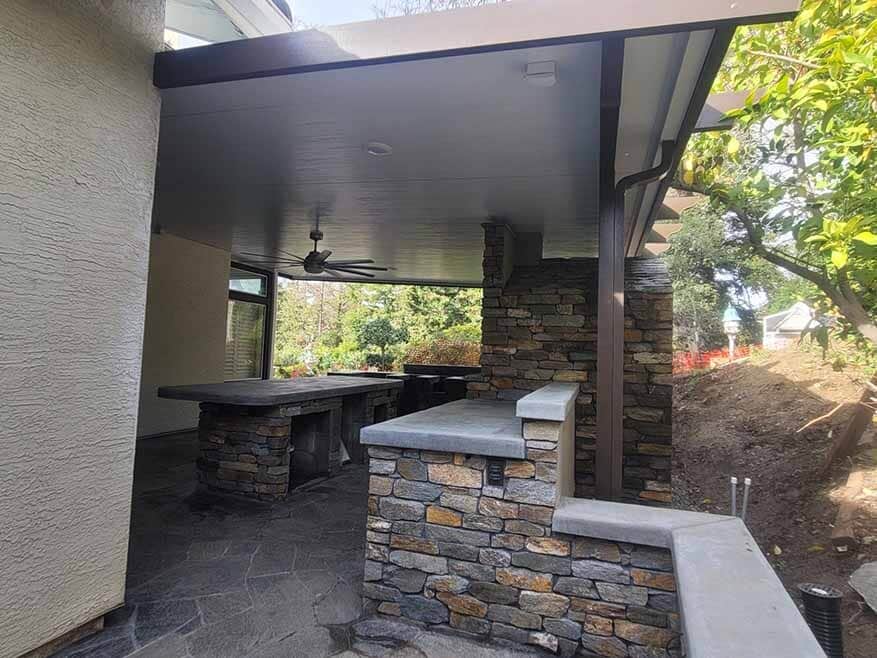
These are best for maximum heat reduction. These include insulated panels that reduce heat transfer. The aluminum surface reflects sunlight, and the insulation layer prevents heat from radiating downward. In hot climates, an insulated aluminum patio cover is the best option for the coolest and most comfortable patio experience.| Block The Heat The Smart Way, Call Now! |
Frequently Asked Questions
Can I install a ceiling fan under a patio cover?
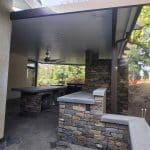
Yes. Solid, insulated, and custom patio covers support a ceiling fan. Many homeowners add fans to improve airflow and stay cooler during summer. With a professional patio cover installation, the structure is properly engineered to safely support ceiling fans and lighting fixtures, giving you both comfort and peace of mind.
Which material lasts longest in extreme heat?
If the damage is small, like minor leaks, loose parts, or surface cracks, you can usually repair a free-standing patio cover without any problem. But if you notice structural sagging, severe rust, repeated leaks, or aging materials, replacement is often the safer and more cost-effective choice. You can also opt for a professional inspection so that the pros can help you decide which option can protect your outdoor space best.
Are insulated patio covers worth the extra cost?
Your aluminum patio cover may leak because of loose seams, worn sealant, or small gaps that develop over time with weather exposure. Minor leaks can often be fixed with resealing or tightening the parts. But if leaks keep returning or spread across multiple areas, you may need professional repair or replacement.
| Choose the Right Patio for Your Home | ||
|---|---|---|
| Insulated Patio Covers | Freestanding Patio Covers | Lattice Patio Covers |
| Solid-Flat Patio Covers | Roof Mount Patio Covers | Lattice Solid Patio Covers |
Takeaway
Shade and heat are not the same thing. If your goal is true cooling comfort, not just filtered light, solid and insulated patio covers are the best options for you. When designed correctly and installed by an experienced professional, the right patio cover can transform your outdoor space into a comfortable area you can actually enjoy, even during peak summer heat.
Read More!
- Signs You Need to Repair or Replace Your Patio Cover
- Benefits of Installing a Cantilever Patio Cover for Your Backyard
- How Automated Patio Covers Improve Outdoor Comfort
- Patio Cover Details That Homebuyers Immediately Spot
Ready to Make Your Patio Cooler This Summer? Contact New Dawn Awning
If you’re looking for a stress-free and reliable patio cover installation in Rocklin, New Dawn Awning is here to help!
With over 55 years of experience, we’ve earned the trust of local homeowners for patio cover replacement, repair, and new installations.
As a locally owned company, we understand the heat, sun exposure, and seasonal temperature changes in the local area. Our skilled team assists you in choosing the right material and patio cover design that is best suited for your outdoor space.
Whether you prefer Lattice, Insulated, or aluminum patio covers, we install each one perfectly and smoothly. Call (916) 989-3533 to get a free quote today!