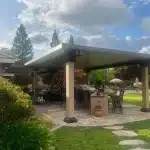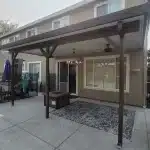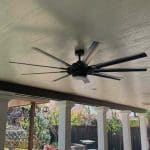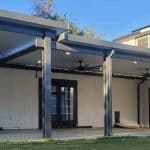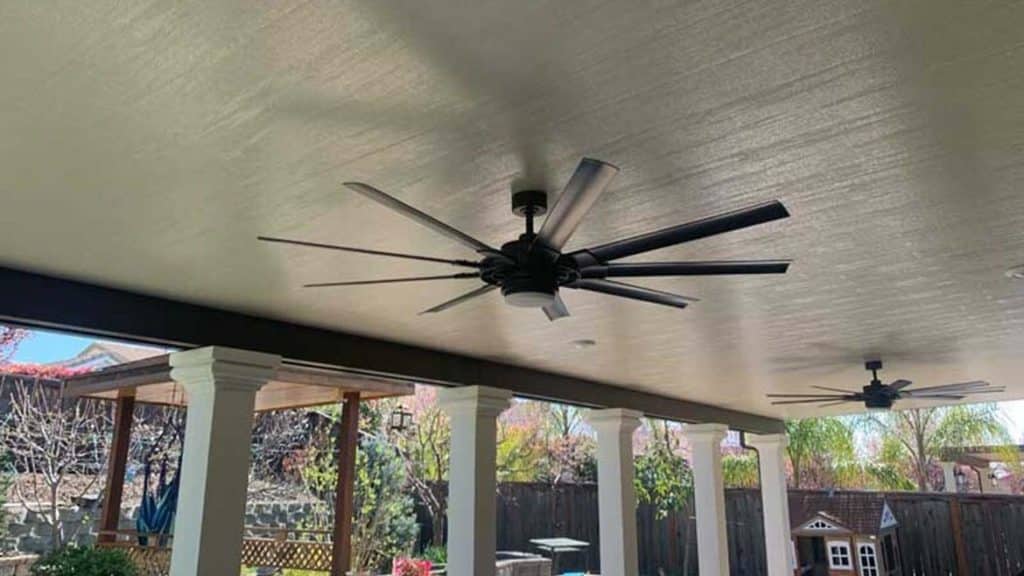
A covered patio can block the harsh Sacramento sun, but that doesn’t always mean the space will feel cool. On a still afternoon, warm air can collect below the roof, leaving your dining or seating area uncomfortable even in the shade.
A properly selected and placed ceiling fan for a patio cover can make a noticeable difference by moving air across the people using the space.
The key is placement. A large fan in the wrong location may do less than a smaller fan centered over the main seating area. The patio cover style, ceiling height, beams, walls, and furniture layout all affect airflow.
Here is how to plan a ceiling fan that works with your patio instead of simply filling an empty spot overhead.
| Stay cool with the right patio setup, Call Now! |
Where Should a Ceiling Fan Be Placed on a Covered Patio?
The best location is usually above the area where people spend the most time.
- For most patios, that means placing the fan over an outdoor dining table, sofa or conversation area, lounge space, covered play area, or main entertaining space.
- Do not assume the exact center of the patio is automatically the best location. If the dining table sits on one side and the barbecue is on the other, placing the fan in the geometric center may push air into a walkway instead of toward the people who need it.
- The fan should have enough open space around the blades. Walls, beams, lights, cabinets, and outdoor heaters can block airflow. Place the fan over seating or dining areas and away from anything that may interfere with air movement.
Before choosing the location, map out the furniture. It is much easier to plan the fan, wiring, and support during patio cover construction than to move everything later.
How High Should an Outdoor Ceiling Fan Hang?
The blades must be high enough for safety but low enough to move air where people can feel it.
ENERGY STAR recommends mounting ceiling fans at least 7 feet above the floor and 18 inches from walls. If ceiling height allows, mounting the fan 8 to 9 feet above the floor can provide better airflow.
For covered patios, the right mounting method depends on the roof height.
| Patio Cover Height | Common Fan Setup | Main Concern |
|---|---|---|
| Lower cover | Low-profile or short mount | Maintain safe blade clearance |
| Standard-height cover | Standard downrod | Balance clearance and airflow |
| High or roof-mounted cover | Longer downrod | Bring airflow closer to people |
| Sloped or angled cover | Sloped-ceiling mounting system | Keep the fan level and stable |
A fan mounted too high may circulate warm air near the roof without creating much breeze below. One mounted too low can feel oversized and may create a safety concern.
The patio cover should also include proper structural support for the fan. It should not be attached only to a thin panel or decorative section that was never designed to carry a moving fixture.
What Size Fan Works Best for a Covered Patio?
Fan size should match the area it is expected to serve, not necessarily the full size of the patio.
ENERGY STAR provides general indoor sizing guidance, but outdoor spaces are more open. Wind, roof height, furniture placement, and the number of open sides can all affect how well a fan works.
A practical starting point is:
| Covered Activity Area | Possible Fan Approach |
|---|---|
| Small café or reading area | One compact outdoor fan |
| Standard dining or seating area | One medium or large fan |
| Long or divided patio | Two or more well-placed fans |
| Large outdoor room | Multiple fans planned as a system |
Do not choose a fan based on blade width alone. Check its airflow rating, usually listed in cubic feet per minute (CFM). Higher airflow can be helpful in open outdoor spaces where moving air is not contained by walls.
ENERGY STAR-certified ceiling fans can be more efficient than conventional models.
For a long or divided patio, multiple fans may provide better coverage than one oversized fan. The best setup depends on the patio’s shape, roof height, beams, and furniture layout.
Which Patio Cover Styles Work Best With Ceiling Fans?
Different patio covers create different mounting and airflow conditions.
1. Insulated Patio Covers
Insulated patio covers work well with ceiling fans because they provide full shade and help reduce heat from the roof. This can make the fan’s breeze feel more comfortable on hot afternoons. Electrical wiring may also be planned within the design for a cleaner finished appearance.
2. Solid Patio Covers
A solid patio cover provides reliable shade and rain protection. Ceiling fans can work well under this type of cover, but the roof should be high enough to allow good airflow and prevent warm air from getting trapped below.
3. Freestanding Patio Covers
Freestanding patio covers are a good option for creating shaded dining, poolside, or garden areas away from the house. Since the structure stands independently, the fan’s electrical wiring and mounting support should be planned during installation.
4. Lattice Patio Covers
Lattice patio covers naturally allow more light and air through the roof. However, the open slats may not provide a simple mounting surface or full weather protection for a fan.
A fan may need a solid mounting section designed to support it. The structure must also provide secure support rather than attaching the fan directly to lightweight lattice pieces.
5. Combination Lattice-Solid Patio Covers
Combination lattice-solid patio covers are especially useful when homeowners want full shade over a table or sofa and filtered sunlight over the rest of the patio. The fan can usually be planned beneath the solid section, where it serves the main activity area and receives better overhead protection.
| Not Sure Which Patio Cover Is Best For You? Call (916) 989-3533 |
Does an Outdoor Fan Need a Damp or Wet Rating?
Yes. An indoor fan should not automatically be used outside simply because the patio has a roof.
ENERGY STAR advises using a UL damp-rated fan in humid or protected locations. A wet-rated fan is appropriate where the fixture may have direct contact with water, such as wind-driven rain on a porch or patio.
Here is the basic difference:
| Fan Rating | Suitable location |
|---|---|
| Indoor-rated | Fully enclosed indoor rooms only |
| Damp-rated | Covered outdoor areas protected from direct water exposure |
| Wet-rated | Outdoor areas where the fan may be exposed to rain or direct water |
Sacramento summers are dry, but winter rain and wind can still reach the underside of an open-sided patio cover. A fan near the roof edge may need more weather protection than one mounted deep below a wide solid roof.
An electrician can confirm the correct fan rating, outdoor wiring, electrical box, switch, and safety protection for the proposed location.
Common Questions About Patio Ceiling Fans
Can I add a ceiling fan to my patio cover after it is already built?
Can a fan be installed under a lattice patio cover?
Which fan direction is best during Sacramento summers?
Read More!
- Patio Cover Maintenance Tips For Dry Vs. Humid Weather
- Why Prices and Demand in Construction Soar During the Summer
- How to Choose the Right Patio Cover Builder Without Overpaying or Sacrificing Quality
- Shade Structures vs Patio Covers: Which Blocks Heat Better?
Takeaway
A ceiling fan can make a covered patio feel more comfortable. However, its placement, size, mounting height, airflow, and weather rating are also important.
It’s best to plan all these details with your patio cover provider before installing it. This helps you get better airflow, cleaner wiring, and a setup that fits the way you use your outdoor space.
With the right design, your patio can be a more comfortable place to relax, dine, and spend time with family and friends.
| Planning a Patio Cover With a Ceiling Fan? Call (916) 989-3533 |
Plan a Cooler Covered Patio With New Dawn Awning
Thinking about adding a ceiling fan to your covered patio? New Dawn Awning can help you plan the fan placement, roof height, and support during the patio cover design process.
At New Dawn Awning, we’ve been installing custom patio covers in Sacramento and nearby communities for more than 55 years. We’re a fully licensed patio cover company, and we design our projects with applicable local building requirements in mind.
Our low-maintenance aluminum patio cover options include insulated, solid-flat, roof-mounted, freestanding patio covers, lattice patio covers, and combination lattice-solid patio covers. We also consider fan and lighting needs during the design stage so the finished structure fits your seating layout and outdoor routine.
Whether you need complete shade or a comfortable ceiling fan for your patio cover, New Dawn Awning can help plan a structure that matches your home and Sacramento’s warm-weather lifestyle. Contact us to schedule your free patio cover design consultation.